
In December 2025, the Supreme Court of India brought a decade-long economic offence saga to a quiet close. By accepting a deposit of Rs. 5,100 crore from the Sandesara brothers, promoters of Sterling Biotech, the Court quashed every criminal, regulatory and civil proceeding against them — CBI, ED, SFIO, income tax, and Fugitive Economic Offenders Act cases included. The bench was emphatic that the order was rendered in the “peculiar facts” of the case and would not constitute a precedent. That instinct was correct, but incomplete. India does not need recurring judicial improvisation under Article 142 to resolve large-scale frauds. It needs a permanent statutory institution — an Economic Offence Resolution Authority (EORA) — to manage structured financial settlements transparently, where monetary recovery serves the public interest better than the indefinite prosecution of extraterritorial offenders.
The Sandesara order exposed a structural vacuum. India’s enforcement architecture is dense — the CBI, ED, SFIO, Income Tax Department and FEOA tribunals — yet none possesses the statutory mandate to negotiate, approve or supervise a settlement that simultaneously secures recovery and extinguishes criminal liability. The Prevention of Money Laundering Act, 2002 and the Fugitive Economic Offenders Act, 2018 are conspicuously silent on structured resolution. The result is a recurring paradox: agencies pursue fugitives across continents for years, lender banks accept haircuts through one-time settlements, and the Supreme Court is ultimately drawn into exercising extraordinary jurisdiction to reconcile the two. That is not institutional design — it is institutional drift.
This proposal sits squarely within India’s broader reform trajectory. The Jan Vishwas (Amendment of Provisions) Bill, 2025, introduced in August 2025, sought to amend 355 provisions across sixteen Central Acts, decriminalising 288 of them and replacing imprisonment for technical defaults with civil penalties adjudicated administratively. Although directed at minor regulatory offences, its underlying philosophy — that proportionate resolution can outweigh reflexive criminalisation, and that administrative adjudication can substitute for court prosecution — is precisely the logic an EORA would extend to large-value economic offences where the harm is overwhelmingly financial.
Comparative experience confirms the workability of the model. The United States Department of Justice has used Deferred Prosecution Agreements (DPAs) since the early 2000s, conditioning the suspension of charges on disgorgement, monitorships and compliance reforms. The United Kingdom’s Serious Fraud Office acquired DPA powers under the Crime and Courts Act, 2013, with mandatory judicial approval at every stage. France’s Convention Judiciaire d’Intérêt Public, introduced under Sapin II in 2016, has produced multi-billion-euro recoveries from Airbus, Société Générale and Bolloré. Brazil’s leniency regime under the Clean Companies Act anchored the Lava Jato recoveries, and Singapore introduced a DPA framework in 2018. Each jurisdiction shares three design features: statutory grounding, mandatory judicial supervision, and transparent publication of terms. India currently has none of these.
An EORA could be constituted as an independent statutory body, with a presiding officer of Supreme Court or High Court standing, supported by members drawn from financial regulation, forensic accounting and prosecutorial backgrounds. Its remit would be confined to economic offences above a defined monetary threshold — say, Rs. 500 crore — involving primarily financial harm. The process would require a formal application by the accused, a recovery proposal exceeding the public-money loss, full and verifiable disclosure, judicial sanction by a designated High Court bench, and a published reasoned order. Crucially, the option would be unavailable for offences involving violence, organised crime or proceeds linked to terror financing.
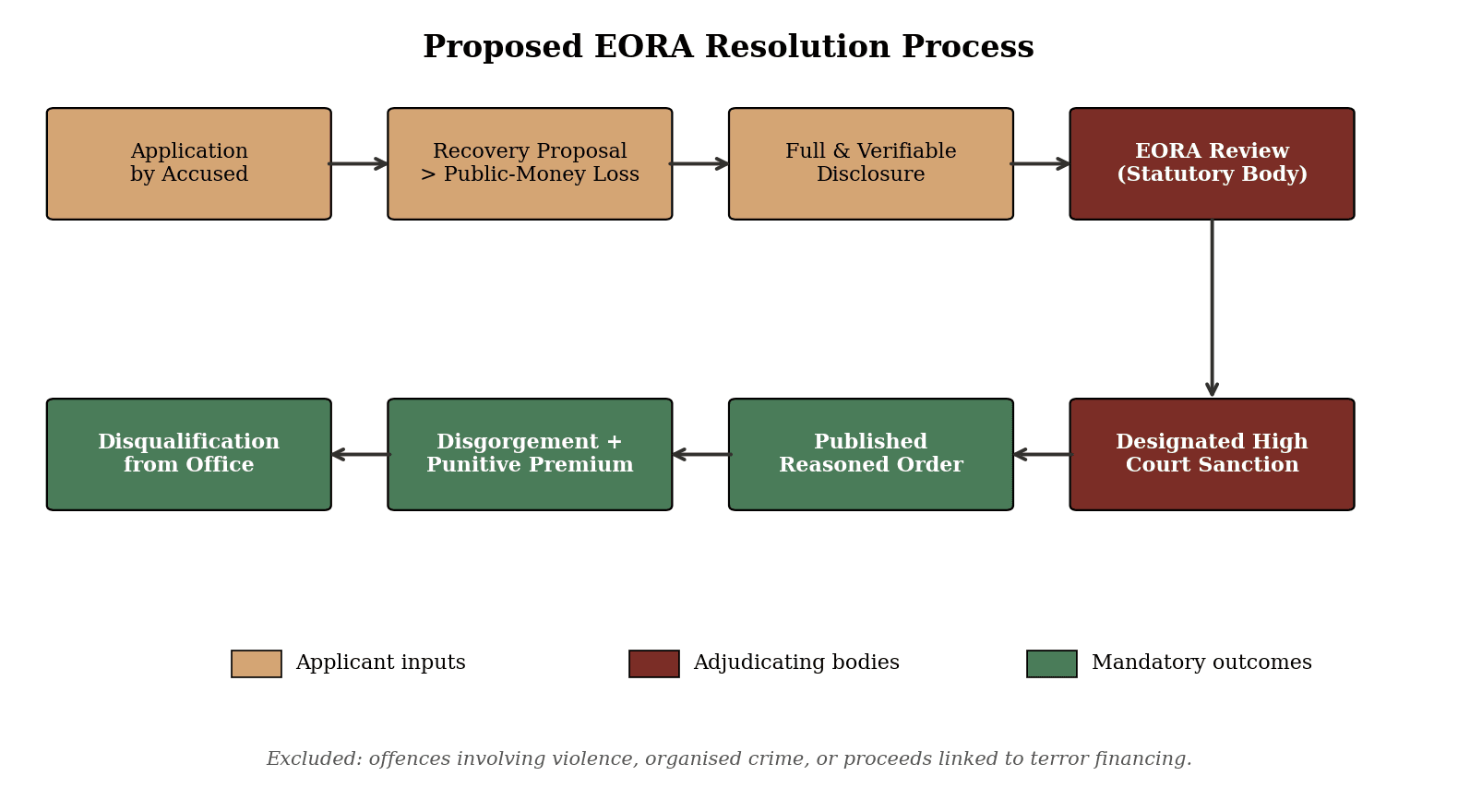
Figure 1. Proposed sequence for an EORA-supervised resolution.
The strongest objection is that such a regime risks creating a tariff for wealth — that powerful offenders will buy their way out while ordinary undertrials languish. This concern deserves to be taken seriously, not dismissed. The answer lies in design, not denial. Settlement must remain conditional on full disgorgement plus a punitive premium; admission of facts must be on record; disqualification from corporate office must follow automatically; and victims, particularly public-sector banks, must receive priority recoveries. Deterrence is not weakened by certainty of recovery — it is weakened by decade-long prosecutions that end in neither conviction nor restitution, as the Mallya, Modi and Choksi files continue to demonstrate.
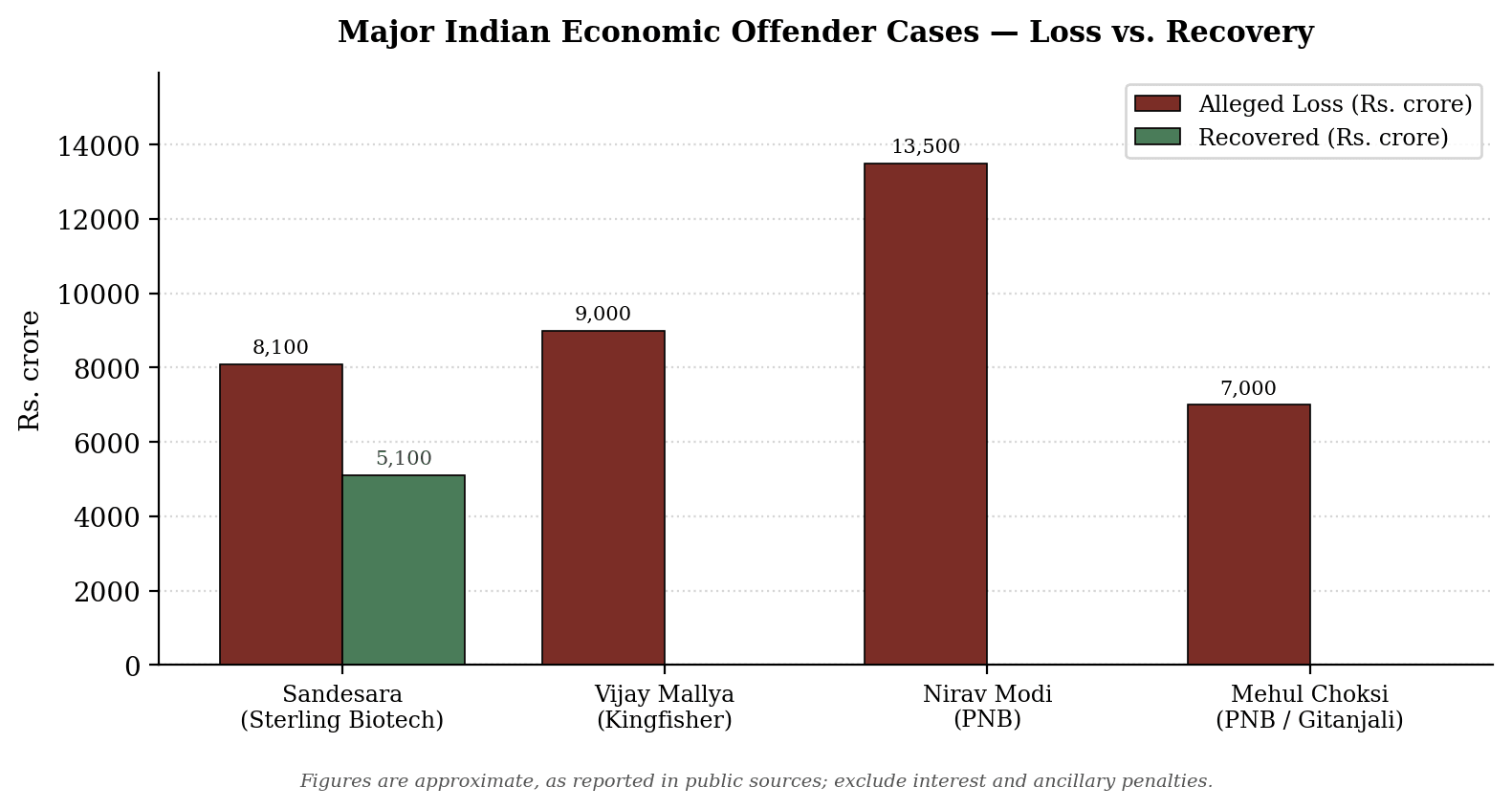
Figure 2. Sandesara is the only major case among the four to have produced any meaningful recovery.
The Sandesara order should be read not as a template but as a diagnosis. The Supreme Court did what it could within the doctrinal space available to it. Parliament now owes the system what only it can supply: a statutory, supervised, and publicly accountable pathway from bars to banks — one that recovers public money without surrendering the rule of law to ad hoc benevolence.