
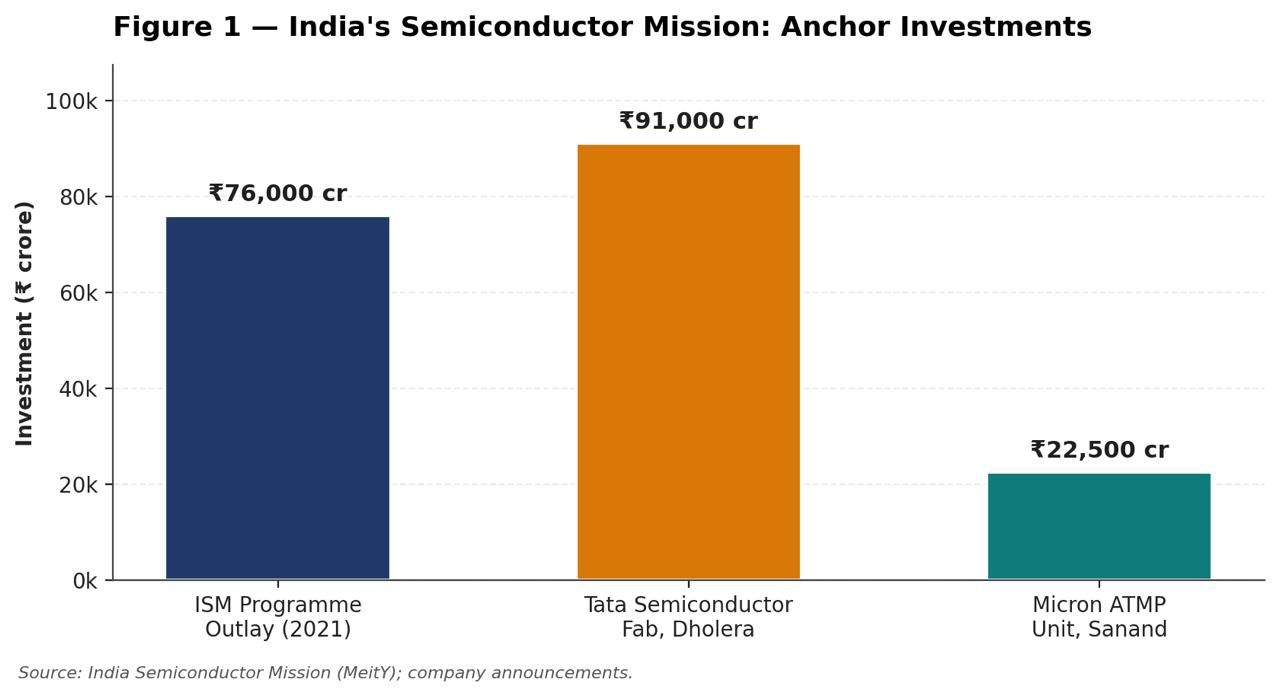
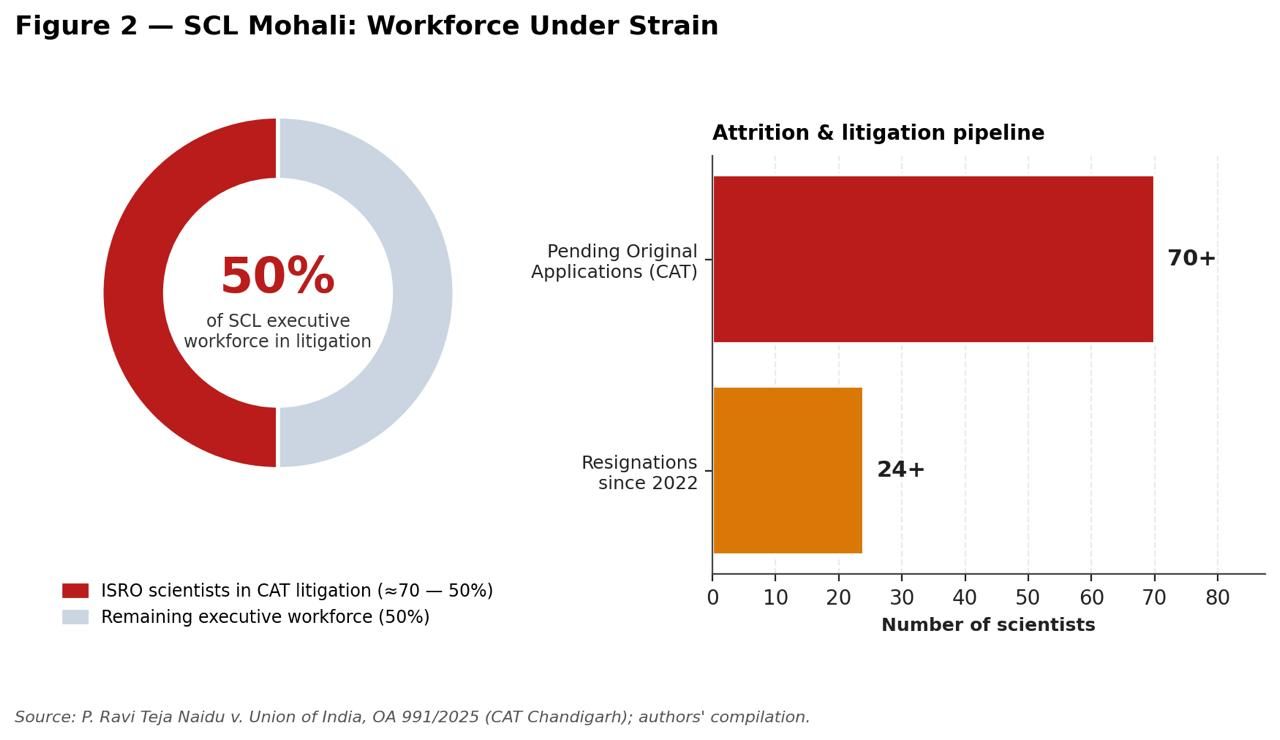
The India Semiconductor Mission (ISM), launched in December 2021 with a ₹76,000 crore outlay, envisions India as a global semiconductor hub—anchored by marquee investments like Tata’s ₹91,000 crore fab in Dholera and Micron’s ₹22,500 crore ATMP unit in Sanand. At the heart of this vision lies the Semi-Conductor Laboratory (SCL), Mohali—established in 1983, steered by ISRO from 2005 to 2022, and then handed to MeitY under the ISM. SCL’s 180nm CMOS capabilities and GaAs compound semiconductor research are critical for EVMs, 5G, defense, space, and academia. Yet this vision faces a grave internal threat: nearly 70 ISRO scientists—representing 50% of SCL’s executive workforce—are now locked in litigation before the Central Administrative Tribunal (CAT), Chandigarh Bench, diverted from fabs to affidavits.
The Administrative Reversal and Its Legal Fault Lines
When SCL was transferred to MeitY in 2022, a critical question of manpower integration was left unresolved. To manage immediate resentment, authorities notified in June 2022 that ISRO scientists would continue on “deemed-deputation” until further orders. This interim arrangement, however, carried no statutory backing—it was an administrative stopgap, not a formal deputation under FR&SR Rule 15 or DoPT’s governing Office Memoranda.
Then, on 04.12.2025, SCL—with background approval from MeitY and ISRO—issued a notice unilaterally absorbing all ISRO personnel into the SCL Society as permanent employees, subjecting them to Society service rules, pay structures, promotions, and retirement benefits. This act is legally vulnerable on multiple grounds.
Constitutional Challenges
First, compulsory absorption without individual consent violates settled service law. The Supreme Court, in Union of India v. N.P. Ponnuswami and subsequent judgments, has consistently held that absorption into a different service requires the employee’s free and informed consent. Forced absorption strips an employee of their parent cadre—a substantive alteration of service conditions that cannot be effected unilaterally.
Second, the absorption bypasses the constitutional framework governing Central Government employment. Article 309 vests rule-making power over recruitment and service conditions in Parliament or the appropriate authority; no such statutory rule authorizes MeitY or SCL Society to unilaterally transfer ISRO cadre employees into a Society’s service. Article 310’s doctrine of pleasure, though broad, does not override the procedural safeguards legislated through the DoPT’s cadre management framework. While Article 311 is specifically invoked by petitioners, it technically protects against dismissal, removal, or reduction in rank—not lateral absorption. The stronger constitutional arguments lie under Article 14 (arbitrary state action lacking intelligible differentia) and Article 16 (equality of opportunity in public employment), as similarly placed ISRO scientists posted elsewhere were not subjected to such forced service changes.
Third, the DoPT’s cadre clearance requirement was bypassed entirely. Under DoPT OM No. AB-14017/46/2013-Estt.(RR) and analogous circulars, absorption of a Central Government employee into a non-Central entity requires (a) cadre authority’s clearance, (b) the employee’s written consent, and (c) verification that the receiving entity’s service conditions are comparable. None of these preconditions were met, rendering the December 2025 notice procedurally ultra vires.
Fourth, the Principles of Natural Justice—specifically audi alteram partem—were plainly violated. The scientists received no show-cause notice, no opportunity to object, and no appellate mechanism before their service conditions were fundamentally altered.
The CAT Judgment and Its Implications
In P. Ravi Teja Naidu v. Union of India (OA 991/2025, decided 29.01.2026), the CAT Chandigarh Bench delivered a significant clarification: ISRO scientists posted at SCL remain Central Government employees of ISRO, irrespective of their place of posting. The Tribunal left the question of repatriation to the Union of India—a deliberate restraint that signals the court’s expectation of executive resolution rather than judicial compulsion. This judgment is persuasive authority for the ~70 pending Original Applications. If the Union fails to act, it risks adverse orders mandating repatriation, which would abruptly deplete SCL’s operational workforce and deal a body blow to ISM timelines.
The Cost of Inaction
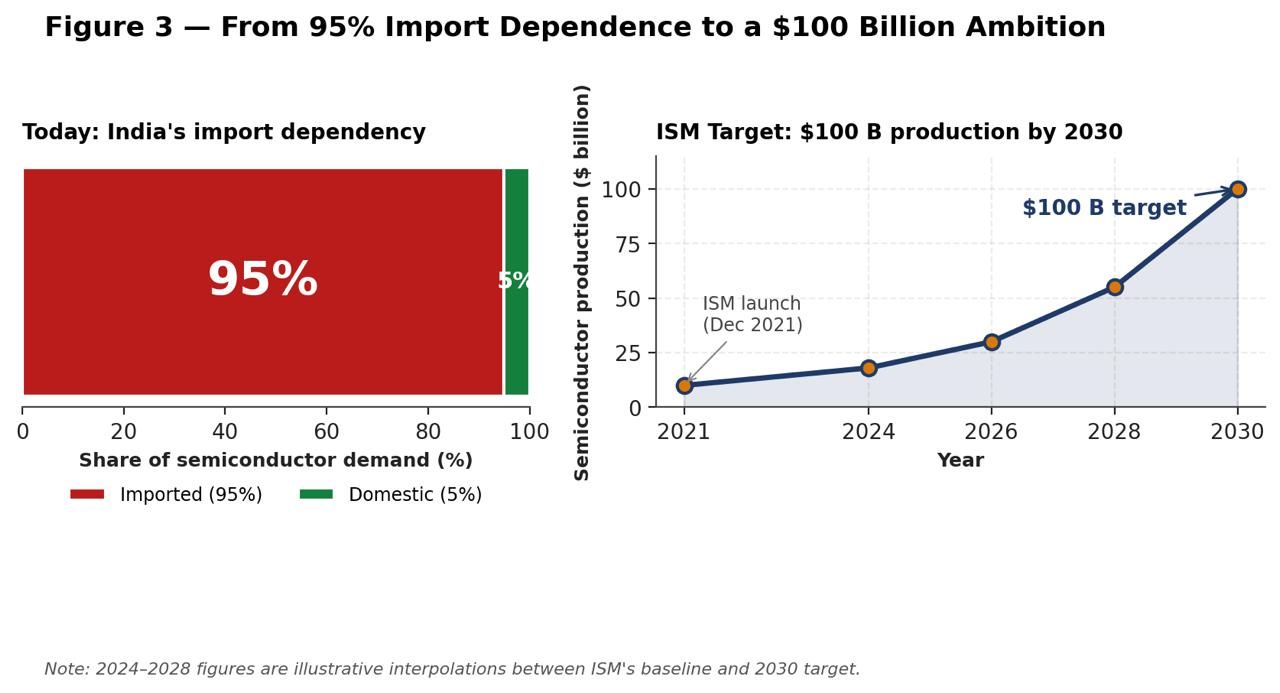
ISM targets $100 billion in semiconductor production by 2030. Over two dozen ISRO scientists have already resigned since 2022, eroding irreplaceable domain expertise in CMOS fabrication and GaAs MMICs. India imports 95% of its semiconductors; SCL is the only indigenous validation lab for private fabs entering the ecosystem. Litigation-driven paralysis directly undermines the $10 billion FDI pipeline.
The Path Forward
Resolution requires DoPT to issue a formal regularization order restoring deemed-deputation status with opt-out clauses and lien retention. A composite service model—blending DoS perks with SCL duties, akin to DRDO integrations—offers precedent. Lok Adalat settlements, leveraging CAT’s mediation framework, can resolve pending OAs without adversarial judgments. Incentive architecture—ESOPs tied to ISM milestones, imec collaborations, and patent fast-tracking—must replace the current climate of uncertainty. India’s ISRO scientists are not bureaucrats navigating transfers- they are the artisans of indigenous chip sovereignty. The government must reconcile law with ambition before getting embroiled into litigation- to prevent the foundation of Atmanirbhar Bharat’s semiconductor dream.
*